
Showing posts with label work. Show all posts
Showing posts with label work. Show all posts
Thursday, May 29, 2014
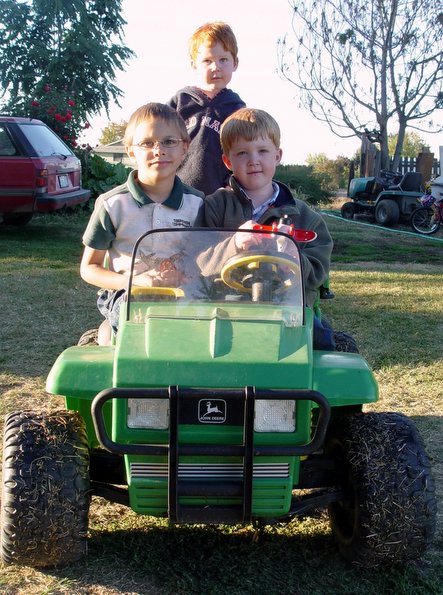
Play is Child's Work

Tuesday, April 12, 2011
The Quiet of Wood and Field

"In the early ages, with the people who were under God's direction, life was simple. They lived close to the heart of nature. Their children shared in the labor of the parents and studied the beauties and mysteries of nature's treasure house. And in the quiet of field and wood they pondered those mighty truths handed down as a sacred trust from generation to generation."
This quote creates a beautiful word picture in my mind. After reading it, I started thinking about the children of the Bible who had a strong relationship with nature. The first child to come to my mind was baby Moses. Even as an infant, he was placed for days in a reed basket and placed in the Nile River while his older sister kept watch. He was rocked by the gentle action of the waves and among the fragrance of plants and the sounds of waterfowl. David also spent much time learning lessons from nature. He was a skilled shepherd, even at a young age. He wrote beautiful songs and poetry, and by studying them we can observe that he had a close relationship with the natural world. He took lessons from everything around him. The boy Jesus also spent much time in nature. He was homeschooled at his mother's knee, by work with his father, and by observations of nature in wood and field. He learned about God's care and of life's lessons by observing God's creation.
What other children of the Bible can you think of spent quality time outdoors? How did their experience influence them in adulthood? Please share!
What other children of the Bible can you think of spent quality time outdoors? How did their experience influence them in adulthood? Please share!
Source quote: Education 221
Photo: Baby robins in our flowering crab apple tree
Photo: Baby robins in our flowering crab apple tree
Saturday, March 19, 2011
Homeschooler Raises Exotic Birds
Natasha K. is a college student living near Orlando, Florida. She was affected by an illness during her childhood that prevented her from attending her local church school. As a result, she was homeschooled during her middle school and high school years. The local academy recommended that she enroll in a high school program for homeschoolers, and she completed all requirements for graduation in three years instead of the usual four. She says she had wonderful teachers and it was a positive experience for her, although she admits that learning a foreign language with only a textbook was challenging. Today I am sharing an interview with Natasha in which she tells about her love for nature and how her appreciation for God’s creatures has helped her become an expert in raising exotic birds.

Tasha, having known you since infancy, I have always admired your innate interest in nature and the things that God made. Please tell us about that interest and how it was developed in your life.
I have always been very in tune to nature and all of the things God created. When I was little I would go up to any animal I could, whether that was a turtle, frog, goat, anything in the norm, and out of it too. I was never fearful of any animal that I happened across. While I was growing up, my family was very involved in nature activities. We would go on nature walks, visit farms, and zoos. We enjoyed all that God has created for us. It was something that my mother and my grandparents encouraged in me and helped me with. I remember when I was little I would cry when even a bug got killed. To this day, I still try to catch the bugs that make their way inside to release them back outside.

Is there one part of nature study that you have taken on as your specialty? What is it? How did it start?
I wouldn’t say I have one area of nature that is my specialty. I love everything to do with nature! However, I do try to help out any animals that need extra assistance. I have rescued cats, frogs, baby possums, birds, lizards, baby raccoons, and many more creatures. Some I have kept until they were ready to be released back into the wild and others I found a more suitable home for because they had extra issues they were dealing with. It’s almost like I have a calling card out there that says that any animal, stray or injured, knows where they can come to find help and a haven.

I know that you have worked extensively with exotic birds. Please tell us about your experience in raising them.
I started working at a bird store during my teen years. It seemed to be a perfect fit for me, because I got to be around animals all day long. I started out as just a grub worker, cleaning cages and doing the dirty work, which I never minded. I enjoyed making things better for the birds. In just doing that, I developed bonds with them. It wasn’t too long though, before the owner of the store saw this connection and wanted me to try working with the babies. At that point I started hand feeding and taking the babies who fed through the night home with me. At one point I had over 50 babies at my house, not to mention all the ones at the store as well. I had a connection with each and every one of them. I started working with the vet and ended up giving shots and helping with all of their other medical needs too, including sitting in and helping with surgeries. I have raised every kind of exotic bird, from parakeets all the way up to a hyacinth macaw (which is the largest of all exotic birds). In addition, I have raised many from the egg or just one day old up, because the parents refused to take care of them. In a sense I became mama bird to all of the babies.

Raising each bird is unique, depending on the age and species of birds. Some of the main issues involved in raising and caring for baby birds are: making sure they have clean and dry bedding when they are really small and then clean cages when they are bigger; hourly feeding depending on the age; and giving each and everyone the tender loving care that makes an affectionate, loving and gentle bird. It is also important to make sure they stay clean, with no formula or waste on their skin or feathers. It’s important to keep an eye out for any changes that there might be in their behavior or health, as this could mean there is something wrong with them which might need to be addressed as soon as possible by a vet. There are many other details but those are the most important ones.
After the babies are finished being hand fed, they get new homes. Sometimes people come into the store and buy them before they are grown enough to leave, so the babies stay around until they are ready for their new homes. Hand feeding is a very precise thing and it could be deadly if done wrong. When I worked at the bird shop, I would try to make sure each potential owner knew about the behavior of each type of bird, as some are more energetic, others more loving, etc. This way the customer would know what they were committing to. Also I’d make sure they knew the life expectancy for the bird they were interested in, as some live almost 100 years. I wanted them to know it really was a lifetime commitment. Then I would make sure each potential owner had a connection with the bird they were interested in. If they didn’t have a connection, I tried to direct them to a different bird. It wouldn’t be a good relationship for the bird or owner if there wasn’t a connection. The main thing was to make sure they were going to be a loving person or family who would take really good care of each and everyone. Even though raising baby birds can be fun, it is a lot of work and takes a lot of commitment! There are also many abandoned and abused birds in the world who need loving and caring homes too.

Please share with us where you are in life right now — and what your plans for your future are. Do you see that nature study will be a part of your future? How?
Right now I am going to college, trying my hardest to finish as quickly as I can. I am studying occupational therapy. Even though I am not perusing a career in nature, nature will always be a part of who I am as a person. I may no longer work in the bird store, but I still get calls for advice from them, customers, and even breeders. In addition I still have my own birds that I have adopted along the way.
Thank you, Tasha, for sharing about raising exotic birds and of the importance of nature study in the development of a well-rounded individual. Much success to you as you continue your education. It is always encouraging to hear from successful homeschooled students.

Tasha, having known you since infancy, I have always admired your innate interest in nature and the things that God made. Please tell us about that interest and how it was developed in your life.
I have always been very in tune to nature and all of the things God created. When I was little I would go up to any animal I could, whether that was a turtle, frog, goat, anything in the norm, and out of it too. I was never fearful of any animal that I happened across. While I was growing up, my family was very involved in nature activities. We would go on nature walks, visit farms, and zoos. We enjoyed all that God has created for us. It was something that my mother and my grandparents encouraged in me and helped me with. I remember when I was little I would cry when even a bug got killed. To this day, I still try to catch the bugs that make their way inside to release them back outside.

Is there one part of nature study that you have taken on as your specialty? What is it? How did it start?
I wouldn’t say I have one area of nature that is my specialty. I love everything to do with nature! However, I do try to help out any animals that need extra assistance. I have rescued cats, frogs, baby possums, birds, lizards, baby raccoons, and many more creatures. Some I have kept until they were ready to be released back into the wild and others I found a more suitable home for because they had extra issues they were dealing with. It’s almost like I have a calling card out there that says that any animal, stray or injured, knows where they can come to find help and a haven.

I know that you have worked extensively with exotic birds. Please tell us about your experience in raising them.
I started working at a bird store during my teen years. It seemed to be a perfect fit for me, because I got to be around animals all day long. I started out as just a grub worker, cleaning cages and doing the dirty work, which I never minded. I enjoyed making things better for the birds. In just doing that, I developed bonds with them. It wasn’t too long though, before the owner of the store saw this connection and wanted me to try working with the babies. At that point I started hand feeding and taking the babies who fed through the night home with me. At one point I had over 50 babies at my house, not to mention all the ones at the store as well. I had a connection with each and every one of them. I started working with the vet and ended up giving shots and helping with all of their other medical needs too, including sitting in and helping with surgeries. I have raised every kind of exotic bird, from parakeets all the way up to a hyacinth macaw (which is the largest of all exotic birds). In addition, I have raised many from the egg or just one day old up, because the parents refused to take care of them. In a sense I became mama bird to all of the babies.

Raising each bird is unique, depending on the age and species of birds. Some of the main issues involved in raising and caring for baby birds are: making sure they have clean and dry bedding when they are really small and then clean cages when they are bigger; hourly feeding depending on the age; and giving each and everyone the tender loving care that makes an affectionate, loving and gentle bird. It is also important to make sure they stay clean, with no formula or waste on their skin or feathers. It’s important to keep an eye out for any changes that there might be in their behavior or health, as this could mean there is something wrong with them which might need to be addressed as soon as possible by a vet. There are many other details but those are the most important ones.
After the babies are finished being hand fed, they get new homes. Sometimes people come into the store and buy them before they are grown enough to leave, so the babies stay around until they are ready for their new homes. Hand feeding is a very precise thing and it could be deadly if done wrong. When I worked at the bird shop, I would try to make sure each potential owner knew about the behavior of each type of bird, as some are more energetic, others more loving, etc. This way the customer would know what they were committing to. Also I’d make sure they knew the life expectancy for the bird they were interested in, as some live almost 100 years. I wanted them to know it really was a lifetime commitment. Then I would make sure each potential owner had a connection with the bird they were interested in. If they didn’t have a connection, I tried to direct them to a different bird. It wouldn’t be a good relationship for the bird or owner if there wasn’t a connection. The main thing was to make sure they were going to be a loving person or family who would take really good care of each and everyone. Even though raising baby birds can be fun, it is a lot of work and takes a lot of commitment! There are also many abandoned and abused birds in the world who need loving and caring homes too.

Please share with us where you are in life right now — and what your plans for your future are. Do you see that nature study will be a part of your future? How?
Right now I am going to college, trying my hardest to finish as quickly as I can. I am studying occupational therapy. Even though I am not perusing a career in nature, nature will always be a part of who I am as a person. I may no longer work in the bird store, but I still get calls for advice from them, customers, and even breeders. In addition I still have my own birds that I have adopted along the way.
Thank you, Tasha, for sharing about raising exotic birds and of the importance of nature study in the development of a well-rounded individual. Much success to you as you continue your education. It is always encouraging to hear from successful homeschooled students.
Wednesday, March 2, 2011
Freedom to Learn

Adults believe that freedom is an inherent right. At the same time, some adults believe that they are the keepers of their children and should be able to control them and tell them exactly what to do. There may be some merit in that way of thinking, but for children to grow and thrive, they need some degree of freedom and flexibility as well. This allows them to grow naturally and achieve much. The Moore Formula approach to learning teaches that within parental guidance and love, giving children the freedom to follow their creative instincts in work, study, and play allows them to find their own inventive genius! And that no one knows better than the teacher-parent where a child’s natural curiosity leads and what their interests are. Taking this journey of exploration together, as parent and child, is an opportunity that when implemented will be one that will be without regret.
For more on this subject: Home School Burnout, Raymond and Dorothy Moore – Chapter 1
Sunday, February 27, 2011
Applying Work, Study, & Service

Applying the study, work, and service method of home education can require that a parent-teacher think outside of the box. Most people think of schoolwork, textbooks, copywork, and the three R’s when they think of a home-school curriculum. But, the development of the intellectual is only one facet of education. When combined with work and service, the academic aspects of home-schooling become one-third of a whole. In the beginning it takes effort and concentration to figure out exactly how to apply study, work and service. It is generally recommended that each aspect receives equal time. Planning purposefully to achieve this goal is essential, although there is room for an ebb and flow on scheduling. Over time it becomes easier and how it is applied becomes natural and unique to each family.
100% study
100% work
100% service
Children should be encouraged to experience life purposefully. They should be encouraged to learn and given time and freedom to explore. They are to give it their all. If they are deep in a subject and interested, they should not asked to stop learning because their time is up. Decide early on that it is a mistake to halt or stunt a child’s learning.
The children should be encouraged to work each day. Routine chores should happen daily and occur each morning and night teach children life skills. As the children grow older, study melds its way into gainful work as they apply their education to skills that earn them money during their teens. The dividing line becomes blurred. They should always be encouraged to do their best work.
The children should be encouraged to be compassionate and to always think of others. Service can be something done as a planned event, but mostly should become a way of life — thinking of family members, friends, neighbors, and others around the world. It can be mixed with study (writing a note to a shut-in or drawing a picture for a sick child) — or service, by keeping a continuous prayer and praise journal during family devotionals each day — or work, in a grandparents or neighbors yard in an effort to serve them because they were not able to.
Each one of these traits blends with the other and together they create a whole. One some days, more time can be spent in study, while on others more time spent on work or service. During our homeschool years, I first kept notations in my plan book (study, work, or service) but over time, as it became a part of our life learning, it became organic and just happened because of habit and inculcation into the thinking of us all. It becomes easier over time. In the initial stages of applying the formula for study,work, and service, it is important to be purposeful about implementing all three aspects of the program.
Planning each segment of the whole creates a home-school where study, work, and service becomes an integral part of learning and the creation of the whole child
Thursday, February 24, 2011
Work as a Part of Education


It is possible for a high school student to be complete academic classwork with three or four hours a day of study. When using a true study, work, and service method of homeschooling high school students, the same principles of time management apply as they do for elementary children. School is life and lasts during every waking hour!
By the time children are high school students, work is an essential element of their education. Instead of applying it daily, it works best to break study, work, and service into a total amount for an entire week. Some days work best if heavier in academics while others were weighed more on work or service.
At the high school level, it seems that when using work for a meaningful part of education, it should be meaningful to the student. There is some work that is required simply because a student is part of the family (cleaning their room, filling the dishwasher, mowing the lawn, etc.). It is the work that happens because they are part of a family team. Other meaningful work happens because the student sets a goal and then works as a means to achieve it. Parents can assist with this goal setting, but the student should be the main force in this decision-making process. Simply giving the child more chores each week so they can get their time in doesn’t seem to work too well for teenagers! But, if they get a vision for work, and it becomes purposeful for them — they will willingly stick to it and become involved in the benefits of work. It may be that they establish a small business of their own (bread baking, housecleaning for a neighbor, babysitting, building computers, mowing lawns) or that they become employees in the business of one of their parents (generally they are allowed by law to work at a younger age if it is a family business). For some children it may mean taking a job in town (working at a fast food restaurant, as a grocery bag boy or girl, or a daycare worker). Their goal may start out simply as a way to earn their own money, but over time they generally become enthusiastic and cheerful in using work as a part of their education.
Another facet of work that can benefit the home school student is for the parent to establish internships for their teen. It can be very effective in giving children opportunities to learn new tasks and to see if they were interested in a variety of careers. To establish an internship: choose a place the student is interested in working, then write a letter to the business owner or supervisor, requesting an internship for your child. Be sure to emphasize that this is a volunteer position and that your child does not expect to be paid for their work. Outline a schedule of 40 hours of volunteer work that fits into the schedule of the employer and the student. When the 40 hours are complete, write another letter to the employer, thanking them for the opportunity they gave your child. Along with the letter, send a form that evaluates your child’s performance in the tasks they were assigned. Ask them to assign a ‘letter grade’ to your child for the work they did. If you are using this as a part of a unit study (work/academics combined), this becomes their grade unless you choose to add a written paper or some other form of evaluation to the grade. In that case, combine the grades according to percentages you establish. Forty hours of work-study is equivalent to 1/2 high school credit.
Providing teens opportunity to use work as a part of their school program gives them the opportunity to apply bits, facts, and facets of information learned and apply them to their daily life. Learning to work as a teen creates adults that have a strong work ethic, a greater sense of self-worth, and have a sense of incentive.
Friday, February 18, 2011
Essentials to Achievement

The three great essentials to achieve anything worth while are, first, hard work; second, stick-to-itiveness; third, common sense.
Thomas Edison
Monday, January 17, 2011
Work, an Educational Tool

After studying how God used work as a natural method of teaching the children of the Old Testament many things, I started reviewing how this educational technique could be used as a method in a successful homeschool. Teaching a child how to work cheerfully and accomplish tasks successfully is as important as teaching them to use their minds. These concepts, together with service to others, create a child that is well-adjusted and able to not only function in society, but to thrive! Jesus said that his Father worked, therefore He worked as well [John 5:17]. Since He is to be our example, it makes sense that productive work be incorporated as a part of every home schooled child’s day.
Home educated children can participate in two general types of work: useful and gainful. Useful work is an action that supports the well-being of self and of others in the home. It includes the daily tasks that make a home function well and create an inviting place to spend time. On the other hand, gainful employment relates to the marketplace and earning an income. This term refers to a first job, like delivering newspapers, to a career in adulthood. Both types of work are beneficial to the homeschooled child when used age appropriately.
In future posts, both types of work and how they relate to educating the whole child will be explored.
Sunday, January 16, 2011
Chores Contribute to Confidence in Life

We usually call “useful work” by another name: chores. These are the tasks that are done to keep our living environment clean, healthy, comfortable, and attractive. In a home that operates smoothly, they are done routinely and without compensation. They are done simply because one lives in their dwelling place. In the life of a busy home school parent (usually the mother), it is important that chores be delegated in order to share the load. With children at home all day long, and the added responsibility of planning and implementing the education process, a mother can find that there are simply not enough hours in the day. It is important that the entire family works together as a team to keep things running smoothly.
Children should be encouraged, even required, to participate in chores. Although they might not always do them willingly, a steady routine will become comfortable and any complaining about the work will be reduced with consistence. Because the children are part of the family team, and because they live in the home, an allowance should not be paid for regular home tasks. There may be times when something above and beyond daily home care needs attended to, and those times can be set aside for “gainful employment” and money paid for doing the job.
Chores are good for children for a number of reasons. They give a child a sense of competence as they realize that they are a contributor to the family unit. Children need to be needed, and chores are a great way to keeping that in view. Chores give them a sense of place. Through daily work, children are taught self-sufficiency and responsibility. Helpful habits are developed that will assist the child as he or she transitions into adulthood. Additionally, useful work keeps children occupied in a positive and productive manner. It helps keep boredom away!
Chores help the family unit function in a cohesive way and they provide the child with skills that will benefit him or her for life!
Friday, January 14, 2011
Assigning Chores and Making them Interesting

Family chores are tasks that contribute to keeping a household run smoothly. They are duties that the whole family participates in, not just mom, dad, or children. Certain tasks may always belong to specific individuals in the family, but the others can be divided up and traded off to make things more interesting for everyone. When working with children, it is important to remember that they are best motivated with mom or dad work with them. This doesn’t mean that the parents are doing the children’s chores, but rather that everyone has a designated time when they are all doing their assigned chores.
Some chores are automatic and should be done routinely every day. When waking up in the morning, children can get dressed, comb their hair, make their bed, tidy their room, put their dirty clothes in the laundry room, feed the pets, and set the table for breakfast. When required routinely these tasks become habit and over time they will happen automatically. In our family, the rule was that pets always get fed before humans. This included the sheep, pony, turkey, and chickens!
Other tasks may not be so routine. If there is more than one child in the family, it is more interesting to trade-off, especially is there are some jobs that are not as desirable as others. Some of the techniques we used in our family for allotting chores were:
1. Write down all the tasks that need done on individual slips of paper. Take turns pulling a chore out of a hat, going back and forth until all the chores are selected.
2. Make a list of chores that need done. Take turns having the children choose which chores they would like to sign up for. Use a different colored marker for each child and highlight those items they chose. This gives them a sense of empowerment, as they get to choose their chores. It’s true that these are the same chores that could simply be assigned.
3. Sign up for some chores and that are traded off weekly with another family member. For example, empty the dishwasher for one week, and for the next week fill it. Empty the wastebaskets in the house one week, and the next week sweep the kitchen floor. Some chores won’t be as desirable as others, but the child knows that once his or her week is up, they get a break the next week while another family member does the task.
4. Allow for something interesting to happen while a chore is being done. Folding laundry while watching a nature DVD turns the task into a family event.
5. Occasionally make a game out of household chores. Hide a surprise under objects that the child can find when dusting the furniture. A nickel under a vase, a stick of sugarless gum behind a picture frame, or a coupon for a cookie from mom all provide incentive and challenge.
6. If the house has become cluttered, set the oven timer for 5 minutes and have everyone pick things up and put them away, counting how many objects they cared for. Have a reward for the person that put the most things away. The reward may simply be that mom or dad will do their next assigned chore.
7. Another technique for a cluttered house is to give each person the task of putting away twenty things. This is conducted like a race, seeing who can put away twenty things fastest.
8. Teach children to put away things as they complete a project. Toys, craft supplies, and school books used should be put away before they move on to another activity. After a meal, have each family member take their dirty dishes to the sink. It helps if they are asked to each choose three or four things on the table and carry them to the kitchen as well.
9. Make a chore chart. Give children a sticker for completing each chore. At the end of the week, count their stickers. Have a reward system where the children receive a prize for achieving their goal. Stickers are not given for chores done in a complaining manner, even if the chore was eventually completed.
10. Chores work best if done on a consistent schedule. Our family found that the time between breakfast and starting school activities for the day worked best. Generally an hour is enough time to allot for daily family chores.
Age appropriate chores can be assigned from toddler years until a child leaves home. They help to establish habits of good home management and the child will reap rewards for a lifetime! Useful work is a strong component in educating the whole child.
Thursday, January 13, 2011
Working Outside with Kids

Outside chores are valuable because they give a child the opportunity to expend energy in a useful and purposeful way. Exercise, a sense of accomplishment, and a feeling of contribution to the family all result from age-appropriate tasks in the yard or garden. Sometimes a parent might assign jobs outside simply because they need done and they think kids should do them. I can remember stories in books that were written to develop character in children. Often they were a variation of the same theme; a child who was supposed to hoe three rows of corn before they went to play, but got bored with the task and simply covered the weeds with fresh dirt. In not time at all, the weeds took over the garden and their lack of diligence was made known. Although there is nothing wrong with assigning rows of weeding, outside chores can be so much more! They can be fulfilling, interesting, and even fun! When a family works together in the yard or garden, a sense of teamwork and accomplishment result. Weeding a flower bed with a sibling, or raking leaves with dad can create memories of companionship that will stay with a child for life. Routines, incentives, and traditions also help children develop an enjoyment for working outside. Over time, the skills learned can be applied to gainful employment as they reach the age that they can work for neighbors or others in the community, thus earning pocket-money of their own. Here are some tips for working with children outside:
1. Generally outside chores are done simply because a child lives in the home. They are a part of their contribution to the family. Sometimes extra chores are required outdoors, and those that are above and beyond routine maintenance can be compensated for with a reasonable amount of pay.
2. Traditions can make outdoor work meaningful. In our family, it was tradition for Grandmother to come visit for a week during spring break. During that week she would help her grandchildren till the soil for individual gardens, then take them to buy plants and seeds. Together they would plant the gardens, adding whirligig, little fences, and pathways through the gardens. After she went home, the gardens were carefully tended by the children because they had meaning to them.
3. Payment for extra jobs provides incentive. Weeding a flower bed can be a daunting task — unless mother pays 5 cents a weed for each one pulled up by the roots! If a flower garden is too weedy and mother would go broke by paying that much per weed, another type of payment system could be used. Twenty-five cents per section (marked by little flags or stakes) is good incentive. Generally, it is not recommended that young children be paid an hourly rate for pulling weeds. They will enjoy the experience more if they are allowed to work at their own pace, and mother will not feel the urge to be prodding them on constantly at their task.
4. Sometimes tasks are not appreciated until something is taken away for a while. In our family, mowing the lawn was the boys job once they became of appropriate age. Sometimes dad would mow around the trees and edges, but the main lawn was a job the boys took turns doing. Dad would follow-up with the weed eating. Because dad had grown up with an old-fashioned push mower and a five acre lawn, he felt he was honoring his boys by providing them with a nice John Deere lawn mower and a lawn of less than two acres. But, since they hadn’t experienced the push mower and larger lawn for themselves, they weren’t too impressed. One day, the eldest decided that mowing the lawn was a task he did not want to do, and much grumbling took place. Instead of lecturing and choosing a punishment that simply grounded him or took away a privilege, father decided that an object lesson would work the best. He quietly, yet firmly removed the keys from the riding lawn mower and prepped the push-mower for action. The son was set to work mowing the lawn by pushing rather than riding the lawn mower. It was an effective lesson and the eldest never again complained about mowing the lawn.
5. A family afternoon of pruning shrubs and trees can be fun! Hauling the branches to a place where they can dry or be dealt with later is interesting if they can be hauled with the riding lawn mower and attached trailer. Burning branches that have dried creates a great campfire for roasting hot dogs and marshmallows as the evening nears. Mixing work with pleasure can make a task less tedious.
6. Giving a child task that shows them that a parent values their abilities lets them know you have confidence in them. Giving them tools and instruction for replacing broken sprinkler heads or repairing a broken sprinkler pipe can relay the message that you value their capabilities and input.
7. Simple jobs, like picking flowers and arranging them in a vase can provide beauty to the home and joy in the heart!
Wednesday, January 12, 2011
Developing Age Appropriate Employment Opportunities

Children through the ages have been given opportunities to earn money through gainful employment. When used appropriately, it helps children develop character and a good work ethic. It gives them an opportunity to explore the world and apply the things they have learned in academia to real life. The sense of worth that productive work gives to a child is of substantial value. Work, when used as a part of a home school curriculum, helps to form values, skills, and knowledge that develop the entire child.
When using work as a part of a homeschool program, there are several things to consider:
1. Work should be appropriate to the age of the child. It should not be tedious or forced, but rather something that engages the interest of the child and inspires them to participate.
2. When working with young children, participating with them encourages them and develops positive attitudes. A team approach works best.
3. The amount of time spent working should be tailor-made to the needs and abilities of the child.
4. It should assign enough responsibility for the child to grow, but not so much that it overwhelms and stresses them.
5. Work that inspires creativity and positive attitude is priceless!
6. It is important to teach the child how to budget the money earned through gainful work. Developing a saving, tithing, and spending plan that works will benefit the child for years to come.
Gainful work can be tailor-made to a child’s interests and abilities. Babysitting, mowing lawns, and setting up a lemonade stand are just the beginning of a world of possibilities when it comes to gainful work. Applying these principles will be discussed in a future post.
Monday, January 10, 2011
Work Opportunities for Children

Sometimes finding work opportunities for children can be challenging. Daily chores create opportunity for routine work experience, and tasks like lawn mowing or pulling weeds in the garden provide opportunity for extra jobs that can provide learning and fulfillment for children. But it’s important that purposeful work be provided that is not part of the daily routine. Children should not be made to feel that ‘work’ is a negative concept and is just something they have to do to make their parent’s lives easier. An altruistic spirit is good and work can help create it, but that is not the entire purpose and role of work as a part of a home school curriculum. Children can develop work attitudes and a sense of self-worth if they have work related jobs that are unique to them and provide them with a sense of fulfillment. Thus, special care needs to be taken in helping a children in this role. In the past, school children could harvest cucumbers or strawberries for pay, or work on a farm changing irrigation pipes. Regulations regarding the age that children can be employed has made it more difficult for children to find work related roles, so creative thought must be applied! Helping a child establish a small home business is one way of providing meaningful work related opportunities for them and a good way for them to earn extra money.
Here are some ideas of work opportunities for children:
1. Being a mother’s assistant or babysitting.
2. Washing cars.
3. Baking homemade bread and selling it to neighbors.
4. Having a bake sale.
5. Setting up a lemonade stand.
6. Participating in a yard sale and having a table of toys, clothes, or things not wanted or needed any more.
7. Folding laundry and/or ironing shirts for a neighbor or relative.
8. Sewing aprons or cushions and selling them to friends and neighbors.
9. Growing a vegetable or flower garden and selling the produce or flowers.
10. Writing a monthly neighborhood newspaper and selling it for a quarter to community members.
Sunday, January 9, 2011
Creating Work Opportunities for Teens

Gainful employment and business opportunities for teens are not as difficult to implement as it is for elementary age children. The key to success in this area is to encourage the teen to find something to do that follows their own natural interest and ability. Encouraging teens to develop skills that they have or would like to develop is key. That, along with the spending money that gainful work provides, works as interest and incentive for the teen.
Some ideas for youth employment and business opportunities are:
1. babysitting and child care
2. housekeeping or assistance with spring-cleaning
3. growing flowers and selling bouquets
4. building customer computers and selling them
5. working as a computer tech, fixing problems and reformatting computers
6. growing produce and selling at a fruit stand or Farmer’s Market
7. making products to sell like jams, jellies, bread, cookies, cakes
8. catering meals for an event like a wedding or family reunion
9. mowing, weeding, planting yard care business
10. ironing and doing custom laundry
11. doing car detailing and washing
12. tutoring young children; being a homework helper
13. bagging groceries at a supermarket
14. working in a fast food restaurant
15. caretaking of the elderly
16. becoming a personal shopper, for groceries or other items
17. gathering firewood and selling it
18. painting rooms, houses, or furniture
19. repairing cars or lawn mowers
20. sewing things and selling them
Sometimes work can be especially "fun". The teen in this picture is modeling for a jet boat promotion and brochure. Although something might look like recreation, it can also be gainful work.
Wednesday, January 5, 2011
The Alphabet of Christian Experience
The development of character is an important facet of creating a child who is whole and emotionally healthy. As a homeschool parent, it is important to not only help the child develop intellect through study, and a work ethic by giving opportunities for both useful and gainful employment, but an altruistic spirit by creating opportunities for service to others. Children from tots to teens can purposefully serve others, bringing joy to others lives, and growing beautiful hearts at the same time. Service to others should be a family focus and an part of every homeschool plan. Dr. Raymond Moore, sometimes called the grandfather of homeschooling, says that “when united with the heart, the head and hand move out in selfless service to others. There is no discipline formula that can match this experience of work and service” [Home School Burnout p. 135].
Implementing work and service into a homeschool program is sometimes called the ‘study, work, and service’ formula. Applying the ‘study, work, and service’ method of home education can require that a parent-teacher think outside of the box. Most people think of schoolwork, textbooks, copywork, and the three R’s when they think of a homeschool curriculum. But, the development of the intellectual is only one facet of education. When combined with work and service, the academic aspects of homeschooling become one-third of a whole. In the beginning it takes effort and concentration to figure out exactly how to apply ‘study, work and service’. It is generally recommended that each aspect receive equal time. Planning purposefully to achieve this goal is essential, although there is room for an ebb and flow in scheduling. Over time it becomes easier and how it is applied becomes natural and unique to each family.

Writer, E. White, speaks of service to others as being a meaningful experience. She says that “a company of believers. . .may do a work in the home, the neighborhood, the church, and even in ‘the regions beyond’, whose results will be as far-reaching as eternity.” A few paragraphs later, she applies this principle specifically to the young, saying that “it is because this work is neglected that so many young disciples never advance beyond the mere alphabet of Christian experience” [Desire of Ages p. 640]. How appropriate that she compares service to the alphabet of Christian experience. Just as study teaches children the alphabet of academics, Christ’s alphabet reaches farther and deeper, shaping hearts and hands for eternity.
Even as the Son of man came not to be ministered unto, but to minister — so should we, by example and instruction. Everyone is needed, both young and old. Together as families we can develop a finishing spirit and see a job well done.
Implementing work and service into a homeschool program is sometimes called the ‘study, work, and service’ formula. Applying the ‘study, work, and service’ method of home education can require that a parent-teacher think outside of the box. Most people think of schoolwork, textbooks, copywork, and the three R’s when they think of a homeschool curriculum. But, the development of the intellectual is only one facet of education. When combined with work and service, the academic aspects of homeschooling become one-third of a whole. In the beginning it takes effort and concentration to figure out exactly how to apply ‘study, work and service’. It is generally recommended that each aspect receive equal time. Planning purposefully to achieve this goal is essential, although there is room for an ebb and flow in scheduling. Over time it becomes easier and how it is applied becomes natural and unique to each family.

Writer, E. White, speaks of service to others as being a meaningful experience. She says that “a company of believers. . .may do a work in the home, the neighborhood, the church, and even in ‘the regions beyond’, whose results will be as far-reaching as eternity.” A few paragraphs later, she applies this principle specifically to the young, saying that “it is because this work is neglected that so many young disciples never advance beyond the mere alphabet of Christian experience” [Desire of Ages p. 640]. How appropriate that she compares service to the alphabet of Christian experience. Just as study teaches children the alphabet of academics, Christ’s alphabet reaches farther and deeper, shaping hearts and hands for eternity.
Even as the Son of man came not to be ministered unto, but to minister — so should we, by example and instruction. Everyone is needed, both young and old. Together as families we can develop a finishing spirit and see a job well done.
Subscribe to:
Posts (Atom)