Showing posts with label life skills. Show all posts

Monday, May 9, 2011

Learning Manners


Teaching manners is important.  Children and youth are generally quite agreeable to learning how to behave graciously when the principles are taught in a positive and interesting way.  Practice makes perfect.  Over time, lessons learned will reap great results!  

One fun way for young children to learn manners is to sing about them.  Here's a song your children might enjoy.  Sing it to the tune of "London Bridge is Falling Down".

Table manners, thank you notes,
Shaking hands, happy host,
Looking at the person's eyes:
I am learning!

Treating others graciously,
Being kind, thankfulness,
Representing Jesus well:
I am learning!

Leaving others' special things
All alone: not a touch;
Our family's rules where'er I go:
I am learning!

Chewing with my mouth all closed;
Tiny bites, shouting:  No!
Eating in the proper way:
I am learning!

"Please" and "Thank You" all the time,
Never rude; fighting:  Why?
Living by "The Golden Rule":
I am learning!


You can read more about teaching manners to children here.

Wednesday, February 9, 2011

The Eyes of a Child


“The most successful parents are those who have the skill to get behind the eyes of the child, seeing what he sees, thinking what he thinks, feeling what he feels.”

Dr. Dobson in Dare to Discipline
 
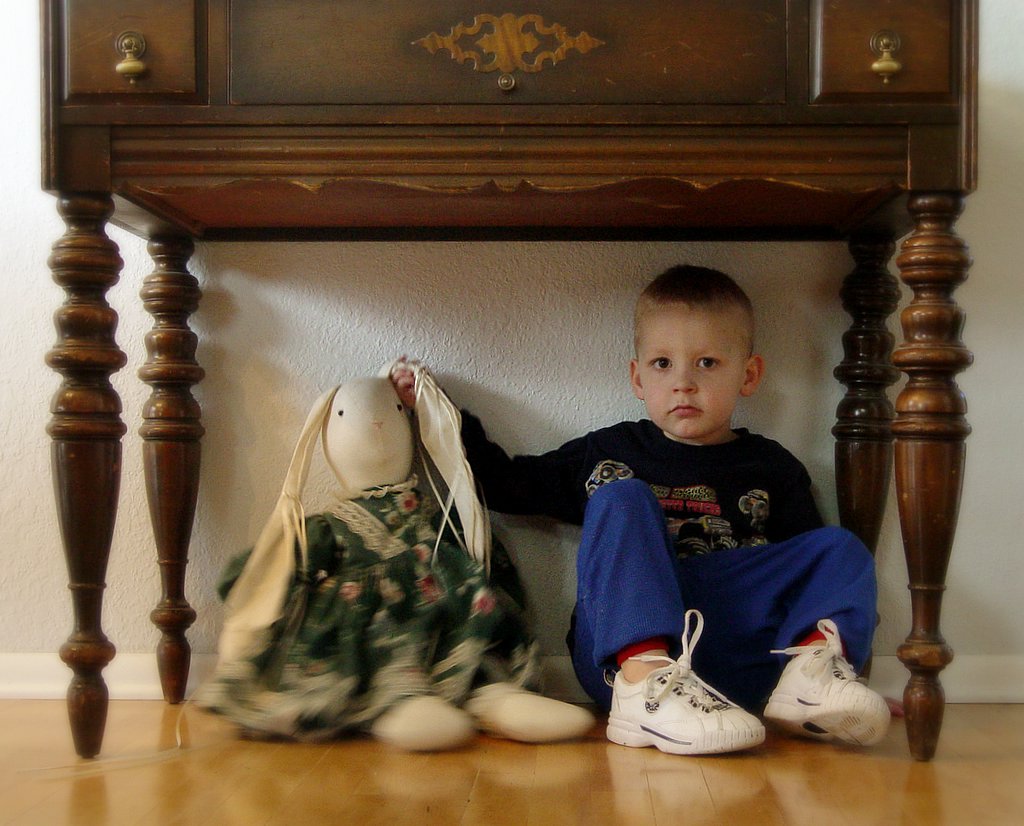
Photo: Kaden, age 3, enjoys time playing with a stuffed bunny

Sunday, January 16, 2011

Chores Contribute to Confidence in Life


We usually call “useful work” by another name:  chores.  These are the tasks that are done to keep our living environment clean, healthy, comfortable, and attractive.  In a home that operates smoothly, they are done routinely and without compensation.  They are done simply because one lives in their dwelling place.  In the life of a busy home school parent (usually the mother), it is important that chores be delegated in order to share the load.  With children at home all day long, and the added responsibility of planning and implementing the education process, a mother can find that there are simply not enough hours in the day.  It is important that the entire family works together as a team to keep things running smoothly. 
 
Children should be encouraged, even required, to participate in chores.  Although they might not always do them willingly, a steady routine will become comfortable and any complaining about the work will be reduced with consistence.  Because the children are part of the family team, and because they live in the home, an allowance should not be paid for regular home tasks.  There may be times when something above and beyond daily home care needs attended to, and those times can be set aside for “gainful employment” and money paid for doing the job. 

Chores are good for children for a number of reasons.  They give a child a sense of competence as they realize that they are a contributor to the family unit.  Children need to be needed, and chores are a great way to keeping that in view.  Chores give them a sense of place.  Through daily work, children are taught self-sufficiency and responsibility.  Helpful habits are developed that will assist the child as he or she transitions into adulthood.  Additionally, useful work keeps children occupied in a positive and productive manner.  It helps keep boredom away! 

Chores help the family unit function in a cohesive way and they provide the child with skills that will benefit him or her for life!